
Open Service Directory: a trusted service route for personal AI
Open Service Directory: a trusted service route for personal AI

On this page
Customers have traditionally reached support through channels that take them to the company they need support from: its Help Center, a web form, an official social account, a website chat or an email exchange. Search engines added another route, but customers could follow a search result to the company’s own page and continue there. In each case, the company controlled the destination and the support experience around it.
AI is changing this behaviour along two paths. As companies are adding AI to the interfaces and support experiences they already operate, customers are increasingly using AI tools in their daily lives, shifting their search behaviours away from those very same traditional support interfaces.
Knowledge
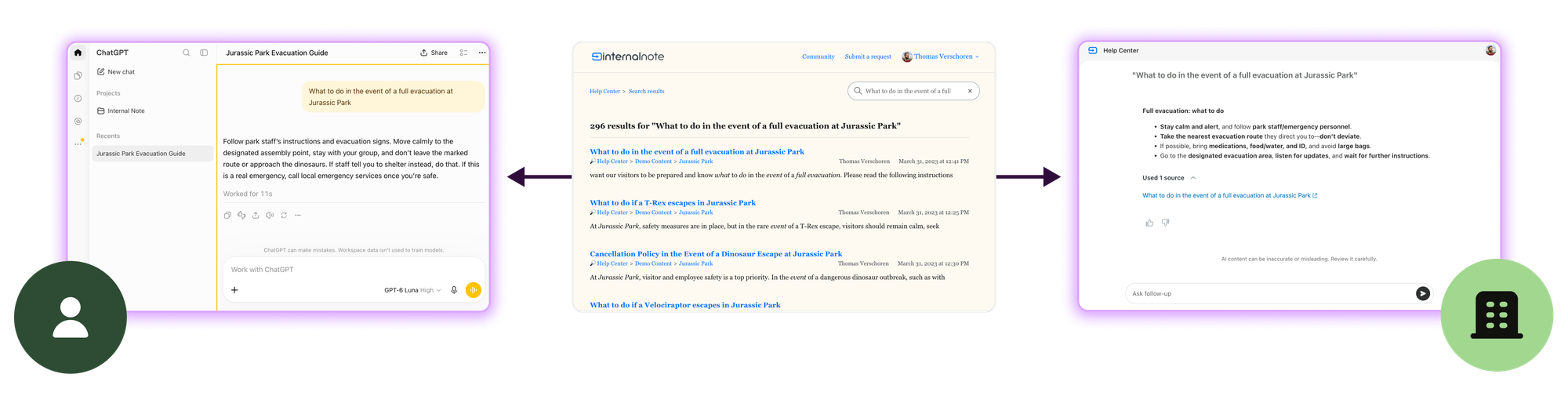
The shift towards AI-powered service has affected traditional search first.
Generative search has removed the need for customers to read source material before getting an answer; they can skip straight to a generated response. Google now presents generated responses alongside website links, while Zendesk Quick Answers can respond using Help Center content reformatted into a custom answer.
That makes accessible, well-structured content more important. Companies should keep their Help Center content current, clear and easy for AI Agents to crawl. Whether the content is used by a company’s AI Agent or by Google and public AI Assistants such as ChatGPT, quality and coverage matter. Gaps may lead AI Assistants to draw on other public sources, including community forums such as Reddit.
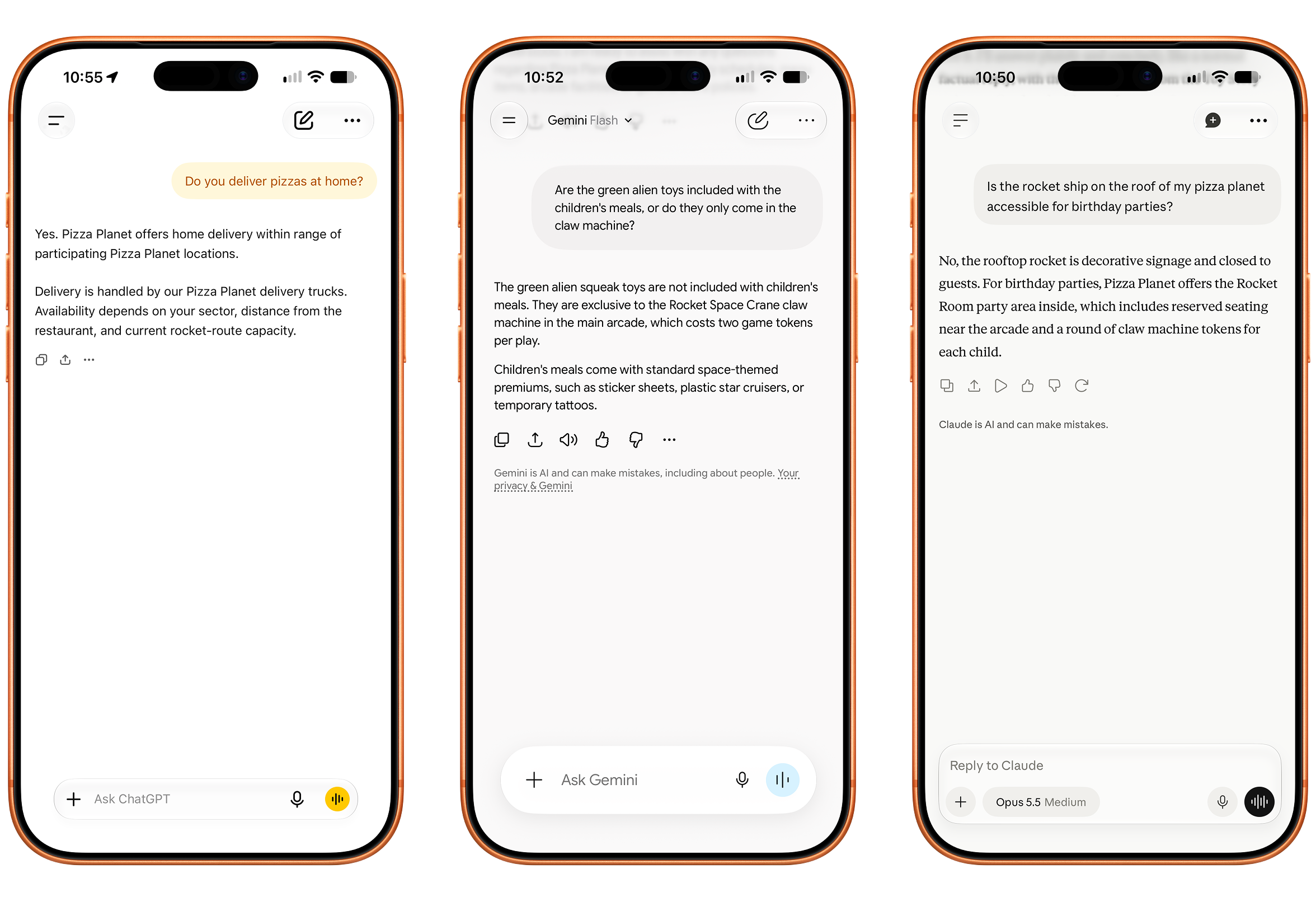
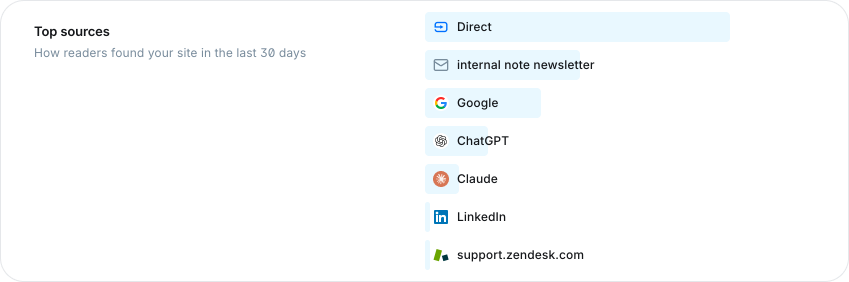
For general knowledge questions, AI Assistants still draw heavily on information indexed from the public web. A clear, current and accessible Help Center gives them company-authored material to use, although it cannot guarantee which sources an AI Assistant will choose or how it will present them. But even so, you'll see traffic from these AI Assistants to your website or website increase over time.
From answers to action
Accessible knowledge helps search engines and AI Assistants present customers with accurate answers. But customers also need problems resolved, and resolution often requires a company to make a decision or take action.
Companies already use service AI agents, including Zendesk AI Agents, to handle customer requests through their websites, apps, email, voice and social channels. Connected to the right knowledge, procedures and systems, an AI Agent can do more than explain a policy: it can check customer details and take an authorised action, such as changing a booking or processing a refund.
Customers have become used to talking to ChatGPT and Claude to find answers. Now they are beginning to expect those same AI Assistants to help with tasks and actions too. Products such as OpenAI’s Dot and Meta’s Muse point towards AI Assistants that can plan and act on a customer’s behalf.
 Thomas Verschoren
A customer might ask an AI Assistant to change a booking, modify an internet plan or request a refund. That AI Assistant needs a way to reach the company that owns the customer relationship in order to handle that request.
But it does not automatically know whether the company has an AI Agent, where that AI Agent lives or how to interact with it. It may find a public article or direct the customer to the company’s website, but then the customer has to leave the AI Assistant’s interface, find the right support channel and repeat the request.
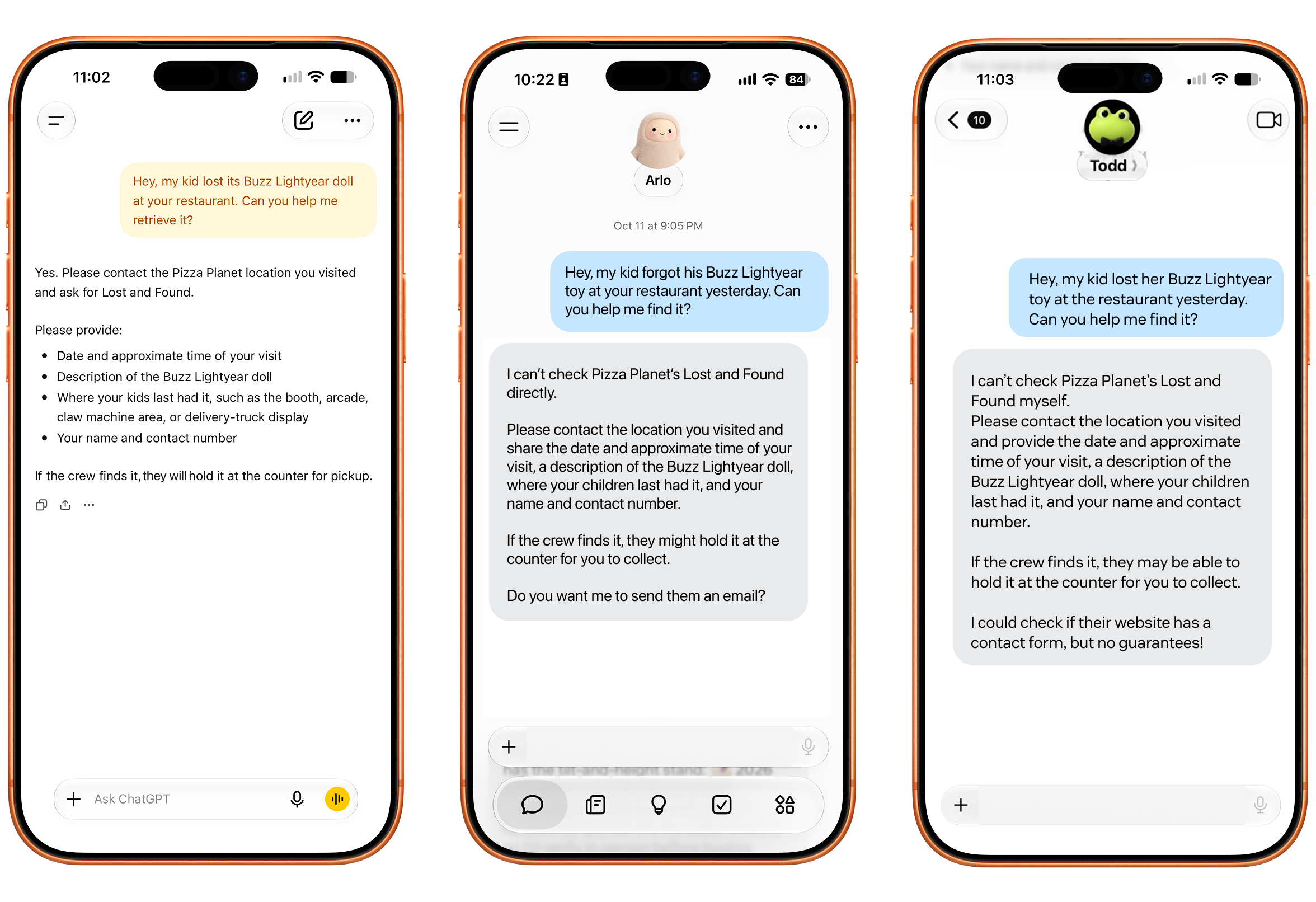
Today, some AI Assistants may send email on a customer’s behalf through an email-service integration, while others use browser automation to enter text into a company’s website chat or web form and relay the response. Both approaches can work, but they depend on the particular integration or website interface. They may be unstable, and there is no guarantee that the AI Assistant will reach the company’s intended support destination.
But a real Zendesk AI Agent may already be able to handle the task and resolve the inquiry; the AI Assistant simply cannot find or reach it.
Open Service Directory
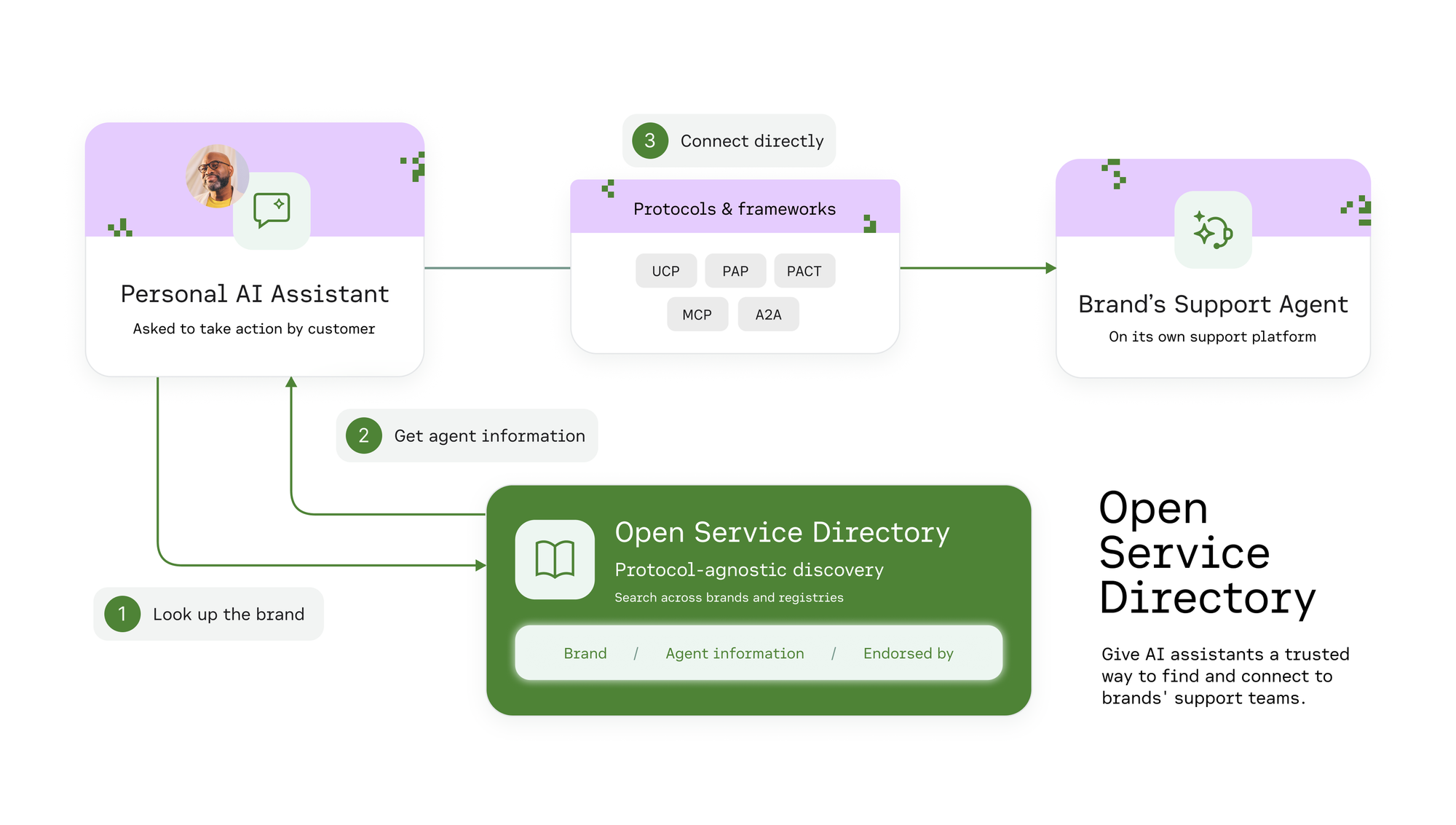
What if a Personal AI Assistant could look up a company’s official support destination, send a company-specific request there and interact with the company through an approved method? That is the problem the Zendesk Open Service Directory is designed to solve.
Zendesk is introducing the Open Service Directory as a shared, open way for companies using Zendesk or another support platform to publish where their service is available. Rather than building a separate app or bespoke integration for every AI Assistant platform, a company can publish its service destination once for compatible AI Assistants to look up.
Think of the Open Service Directory as a phonebook for AI Agents. A phonebook helps you find a company’s contact information and, sometimes, the services it provides. You can then look up the company and contact it. In the same way, the Open Service Directory helps a Personal AI Assistant find a company’s official service destination and the Connection it can use to reach that service. The Company’s AI Agent can then handle the customer’s request.
Finding a service and knowing what it can do are separate steps. The Open Service Directory helps an AI Assistant discover a company’s real support destination. Once the AI Assistant reaches that destination, the company’s service and its connection type can determine which capabilities are available.
The Open Service Directory builds on the Agentic Resource Discovery (ARD) specification, an open protocol that helps AI Assistants discover resources suited to a task before using them. ARD can describe capabilities such as AI Agents, MCP servers, APIs and workflows, then direct the AI Assistant to connect through each resource’s own mechanism. It provides a discovery layer, not the runtime that executes the request.
Depending on the setup, that connection could use MCP, agent-to-agent communication or another supported method. The customer continues to use the interface of their chosen AI Assistant; the connection is the way that AI Assistant and the company’s service communicate.
The Open Service Directory is intended to make company support easier for AI Assistants to discover, but a listing alone does not make every action possible. A company still needs to configure its AI Agent to handle common requests, follow procedures and carry out actions, just as it would for support interactions with people. Each AI Assistant platform also needs to support the directory.

The customer experience
The process starts with the company. It publishes its approved support destination to the Open Service Directory so a compatible Personal AI Assistant can look up the company and find the official route to its service. The listing is a directory entry: it does not contain a knowledge, procedures or internal business logic. Depending on the setup, the entry might lead to an AI Agent, an email address or an existing support website or form.
When a customer asks for help with a company-specific task, the AI Assistant can look up the company in the directory. For example, a customer might ask, “My child left their Buzz Lightyear doll at Pizza Express last Monday. Can you help me contact them about getting it back?” The AI Assistant searches for Pizza Express, receives the company’s verified support details and uses the listed route to contact the service that can handle the request.
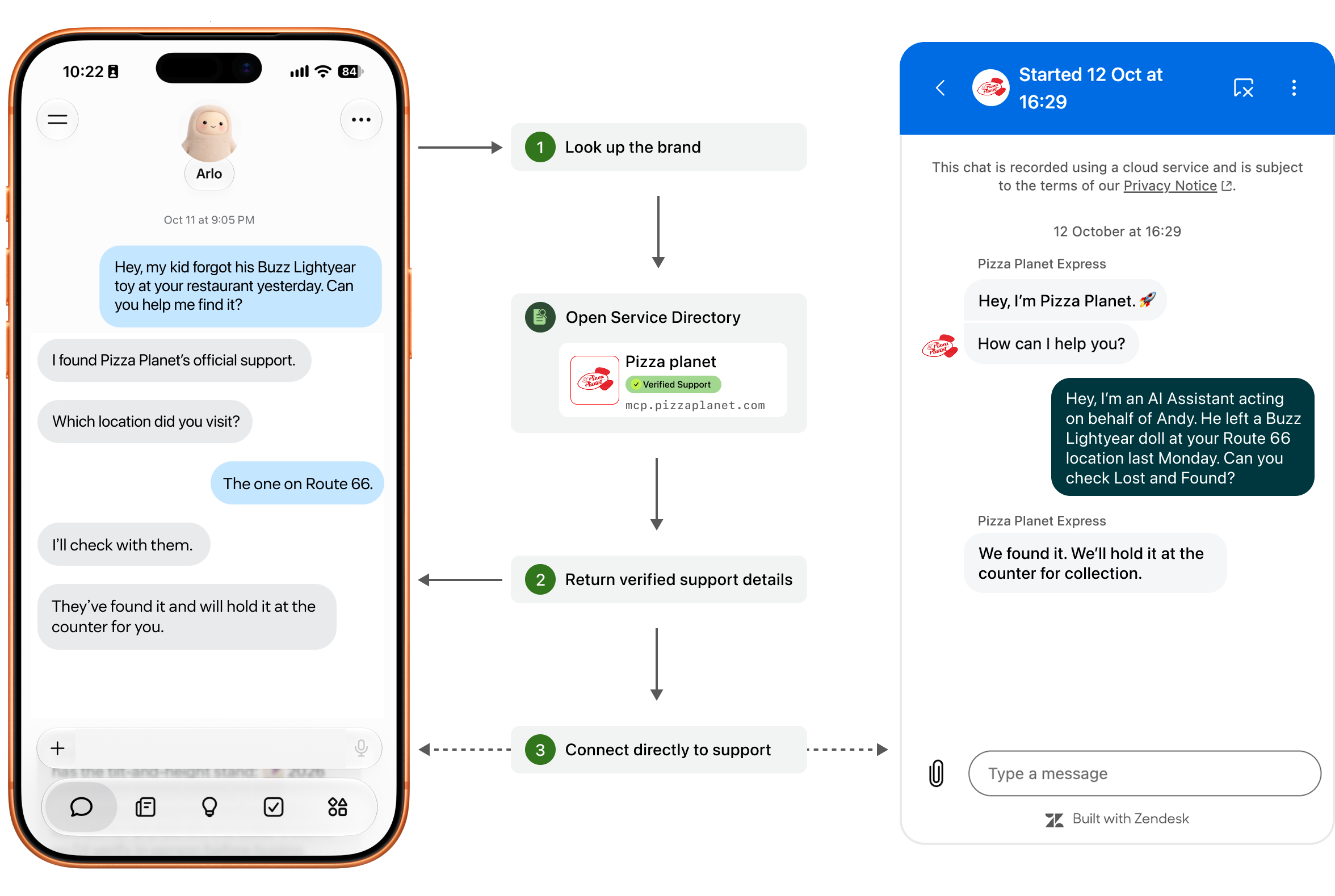
From that point, two separate but parallel interactions take place. The customer continues talking to their Personal AI Assistant, while that AI Assistant contacts the company’s AI Agent, such as a Zendesk AI Agent, through the supported connection method. The customer remains in the AI Assistant’s interface; the AI Agent does not take over the customer’s conversation with the AI Assistant.
The AI Assistant sends the AI Agent the request and the task-specific details needed to handle it. That agent may ask for more information to identify a booking, check availability or clarify the request. It however does not receive the customer’s full conversation with the AI Assistant. The AI Assistant decides which relevant details to share for the service interaction, while the broader conversation remains between the customer and their assistant.
The AI Agent then handles the request using its own procedures and policies. In the Pizza Express example, it could follow the company’s lost-property procedure, ask which restaurant the customer visited and confirm the details of the Buzz Lightyear doll before arranging its return.
If the AI Agent needs to know which restaurant the customer visited, it can ask the AI Assistant, which then asks the customer and passes the answer back. The two AI systems can continue exchanging the information needed to resolve the request.
Sometimes a human agent may need to take over or review the request. Alternatively, the company’s procedure may continue asynchronously by email. The AI Agent can tell the AI Assistant what to expect, and it can then relay that information to the customer.
The service interaction is logged in the company’s support platform, where you can manage it like another support interaction. The AI Assistant drives the interaction, the Open Service Directory provides the route; the AI Agent handles the task.
New service behaviours
The Open Service Directory gives companies a way to manage access to a service solution they already operate, while conforming to the growing use of Personal AI Assistants. A customer can remain in their chosen AI Assistant while it interacts with an AI Agent.
Companies may therefore receive requests from an AI Assistant acting for a customer, rather than directly from a person using a company interface.
This new interaction pattern is already happening without the directory. Customers use AI Assistants to write emails or act on their behalf through browser sessions and automated email. The Open Service Directory gives companies a way to structure these interactions and publish the route they want compatible AI Assistants to use, instead of relying on those AI Assistants to find or improvise a way to contact them.
This change does affect how companies organise their support procedures. They need to consider how their AI Agent should respond when a request comes from an AI Assistant instead of real person, and how that path may differ from an interaction with that human customer directly.
Leveraging existing capabilities
Open Service Directory can make the work a company has already invested in its AI Agents, procedures and automations available through new AI-driven channels. Rather than building a separate service experience for every AI Assistant platform, companies can use capabilities built in Zendesk and expose them through supported connections. The directory then helps AI Assistants that support it discover the company’s service.
As Zendesk’s headless service layers, driven by MCP and A2A, develop, companies will be able to extend more of those capabilities to these new agentic customer channels. The opportunity is to connect emerging customer channels to the service environment companies already operate, while keeping company policies, procedures and the AI Agent in the loop.
Verification and privacy
Open Service Directory helps a Personal AI Assistant find a company’s approved destination, but companies still need to distinguish between a human guest, an authenticated customer and a request from an AI Assistant. They may also need to determine whether the request came through a recognised connection published in the directory or through an AI Assistant that found some random way to contact them.
The directory listing also does not authenticate the customer or prove that their AI Assistant is authorised to act on their behalf. Identification, authentication, governance and approval are still something companies need to manage and check, and those processes may need to be updated to account for this new kind of request.
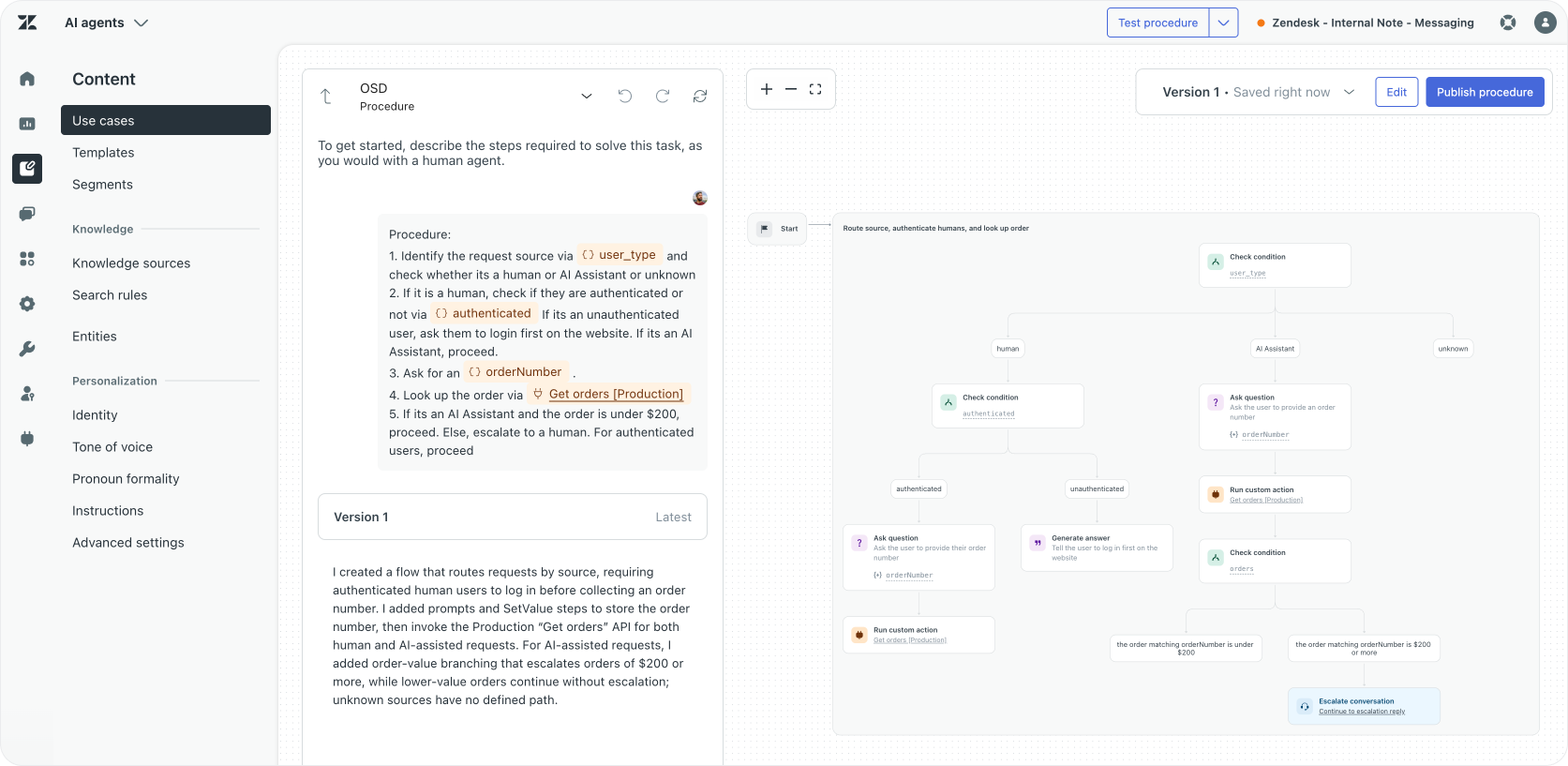
These new patterns reshape how an AI Agent handles a request. A company might allow its AI Agent to complete a routine request for an authenticated customer, while requiring additional approval or review by a human agent when the request comes from an AI Assistant or involves a higher-impact action. The company’s identity checks, permissions and service policies still apply.
A new route to service
The Open Service Directory gives companies a way to make their service discoverable to compatible Personal AI Assistants as customers begin asking those AI Assistants to take action. Any company can publish a way to connect to their AI Agent, giving customers access to resolutions driven via agentic procedures and automations, while keeping control of how these requests are handled.
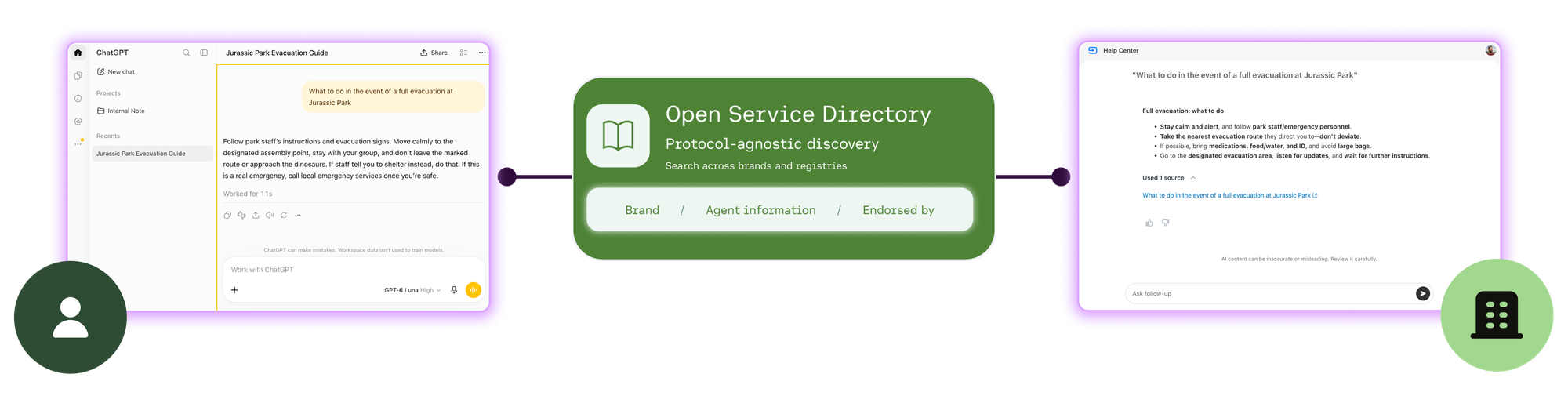
For customers, that means they can use these new AI Assistants, but get better and more direct support from the companies they love. For companies, the Open Service Directory makes their existing service environment discoverable for customers across these new channels, while staying in control of their processes.
Open Service Directory gives AI assistants a trusted way to find official brand support across a broad ecosystem of brands and service platforms. Participating CX platforms and AI providers can publish verified support listings for the brands they serve.
Zendesk will share more details about the Open Service Directory next month at Zendesk AI Summit