Zendesk Relate 2026 - Evolving the Zendesk Resolution Platform
Zendesk Relate 2026 - Evolving the Zendesk Resolution Platform

On this page
Zendesk Relate is the company’s flagship annual event for customer and employee service leaders, bringing together more than 2,000 attendees for three days of keynotes, product sessions, workshops, networking, and customer conversations. This year, the conference is taking place May 18–20 in Denver, showcasing us the latest evolution of the Zendesk Resolution platform.
For the last three years, Zendesk has been pushing a single vision forward. Customer and Employee service isn't about closing tickets. It's about resolving customer questions. Those resolutions are made possible by its AI Agents working autonomously, or in collaboration with your agents.
At Zendesk we call that concept the Resolution Platform. A connected platform of Agents and Copilots that empower your service operations.
The evolution that got us here
Zendesk's AI journey started with AI capabilities bolted onto the existing Suite. AI Agents to automate the front line. Agent Copilot to assist the human team. Zendesk QA to score the result. Analytics to surface the insights. Each useful in isolation. Each letting customers cherry-pick which part of their operation they wanted to infuse with these new AI capabilities.
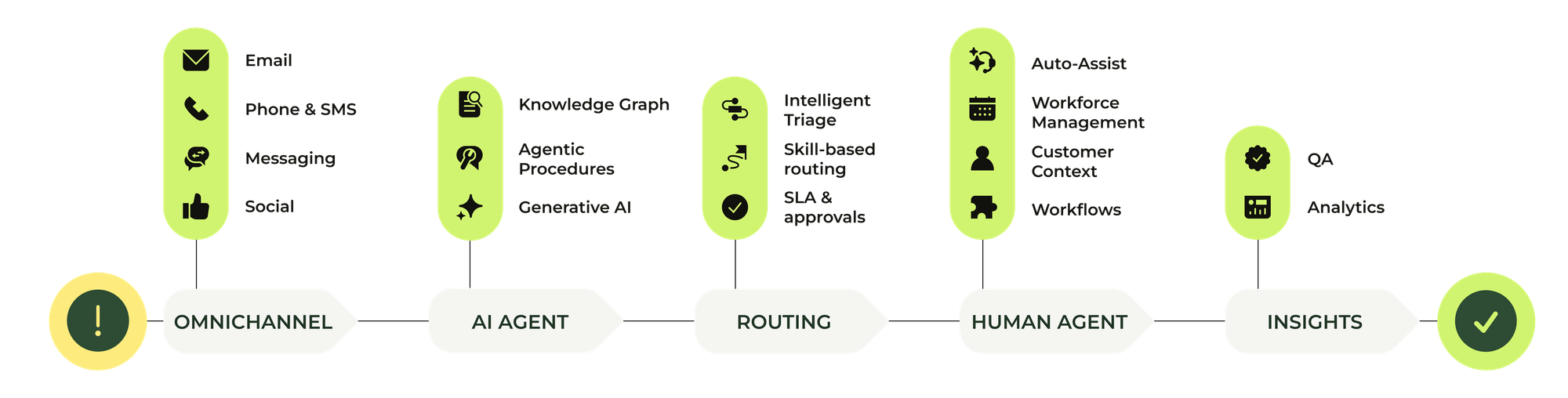
As the platform evolved, those capabilities stopped behaving like individual features. They started behaving like one connected system. AI Agents pass conversations with full context to Agent Workspace if an escalation is needed. Omnichannel Routing and Intelligent Triage make sure the ticket reaches the right agent. That agent is assisted by Agent Copilot to gather any additional context, and uses next-best actions and suggested replies via auto-assist to resolve the conversation. Each resolved conversation is picked up by Analytics and QA giving your team the insights they need.
As the different features got pulled into one platform, the focus shifted away from an AI-powered ticket platform and toward a Resolution Platform.
Stop counting tickets and start measuring resolutions.
At the AI Summit last October, Zendesk introduced the Resolution Learning Loop. Analytics no longer gave your team data on how they were performing, but the system also started leveraging that data to improve your operations. A continuous System of Action where insights from one step power improvements and actions for the next. They introduced resolution-based pricing and started laying the foundation for a new era of customer service.
Relate 2026 is the next big step in that evolution.
Resolutions and Learning
For most of Zendesk's history, the support inbox, your agents, and tickets were the centre of gravity.
Anything before a human agent touched a ticket was seen as deflection. Anything after ended up as reporting. Self Service was the vision, and we measured the work of human agents by counting tickets and focusing on first reply time, average handling time and customer satisfaction.
That balance has now changed. Quick Answers answer questions before a conversation even gets created. Agentic AI Agents handle more and more of the front line by automating even complex use cases.
What used to be called deflection is now the bulk of the work. And your customers resolutions often happen before anyone on your team sees or touches the conversation.
So the centre moves. In this new world resolutions sit in the middle. And two flows radiate out from it.
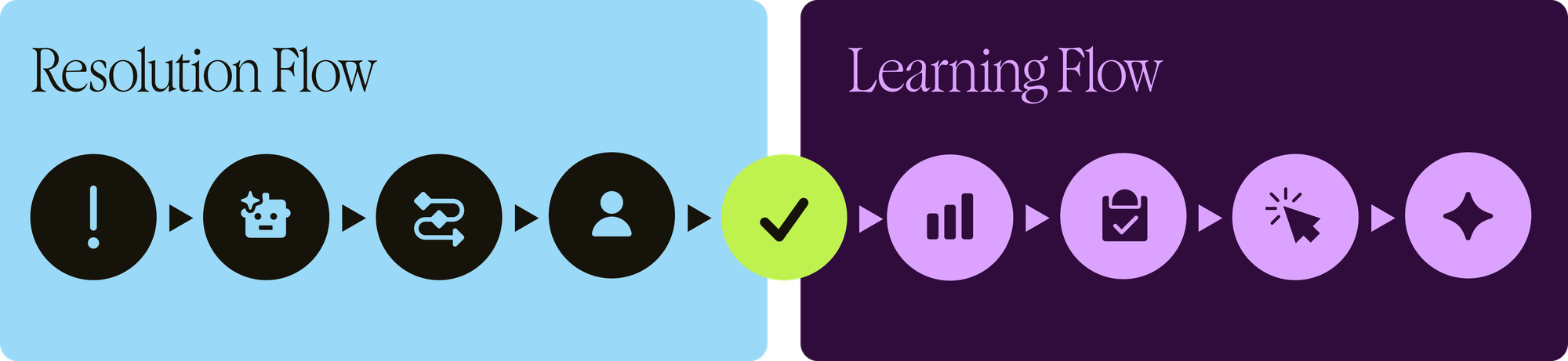
The first is the resolution flow. Your customers, AI Agents, Agent Copilot and your team reside here. This is where questions become answers. Where requests become refunds. Where enquiries become bookings. Every interaction leads up to a resolution.
The second is the learning flow. This is where conversations turn into opportunities to improve. Where QA reports drive procedure updates. Where ticket patterns become new knowledge articles. Where admin insights become routing rules. Where every interaction becomes an opportunity to do better.
These two flows feed each other. More resolutions generate better learning data. Better learning data drives more suggestions to improve. Implementing those changes leads to better resolutions. This is what we call the true Resolution Learning Loop.
The releases at Relate 2026 strengthen both sides of the Resolution Learning Loop. And they do so in a way that makes the cycle feel more connected than ever.
Specialised AI Agents
Gone is the differentiation between AI Agents Essential and Advanced. All Zendesk customers now have access to a team of autonomous AI Agents that run your operations.
These AI Agents are now agentic first. They can reason across interactions, follow procedures and dynamically adapt to a customer's context across messaging, social, email and web forms. And later this year we'll see the availability of the previously announced AI Agents for Voice, completing the multi-channel vision announced last year.
For companies that are interested in Zendesk's AI vision but are tied to older service platforms, the new Forethought AI Agents by Zendesk brings these same resolution-driven AI Agent capabilities to their current platforms.
But it’s Agent Builder with its specialised Custom Agents that is the biggest announcement this year.
Until now Zendesk had automation capabilities that were purpose-built to run on specific channels. AI Agents for customer-facing conversations. Agent Copilot procedures assisting human agents. Triggers and Action Builder for deterministic flows on top of tickets. But as automation and use cases grow, so does the complexity and need to automate specific business processes and handle more complex logic inside the platform.
Custom Agents offer a way to handle these processes directly inside the platform. You can build a Claims Agent that extracts facts from documents, validates serials, detects failure modes and proposes remedies. You can build a Refund agent that runs that refund logic. Or create an agent for fraud detection.
These Custom Agents can run autonomously on conversations, or can be invoked by AI Agents or Agent Copilot as part of their existing procedures. They offload a lot of complexity into a contained block of logic, reusable across your operations, deeply integrated with the rest of your business processes.
The arrival of these autonomous service agents shows how the relationship of AI Agents and Agent Copilot with the underlying knowledge and action layers is evolving. Instead of AI Agents and Agent Copilot working as separate agents, the platform is moving towards a multi-agent environment where conversational agents can pass jobs to Custom Agents for certain sub-processes, while they retain control of the overall conversation.
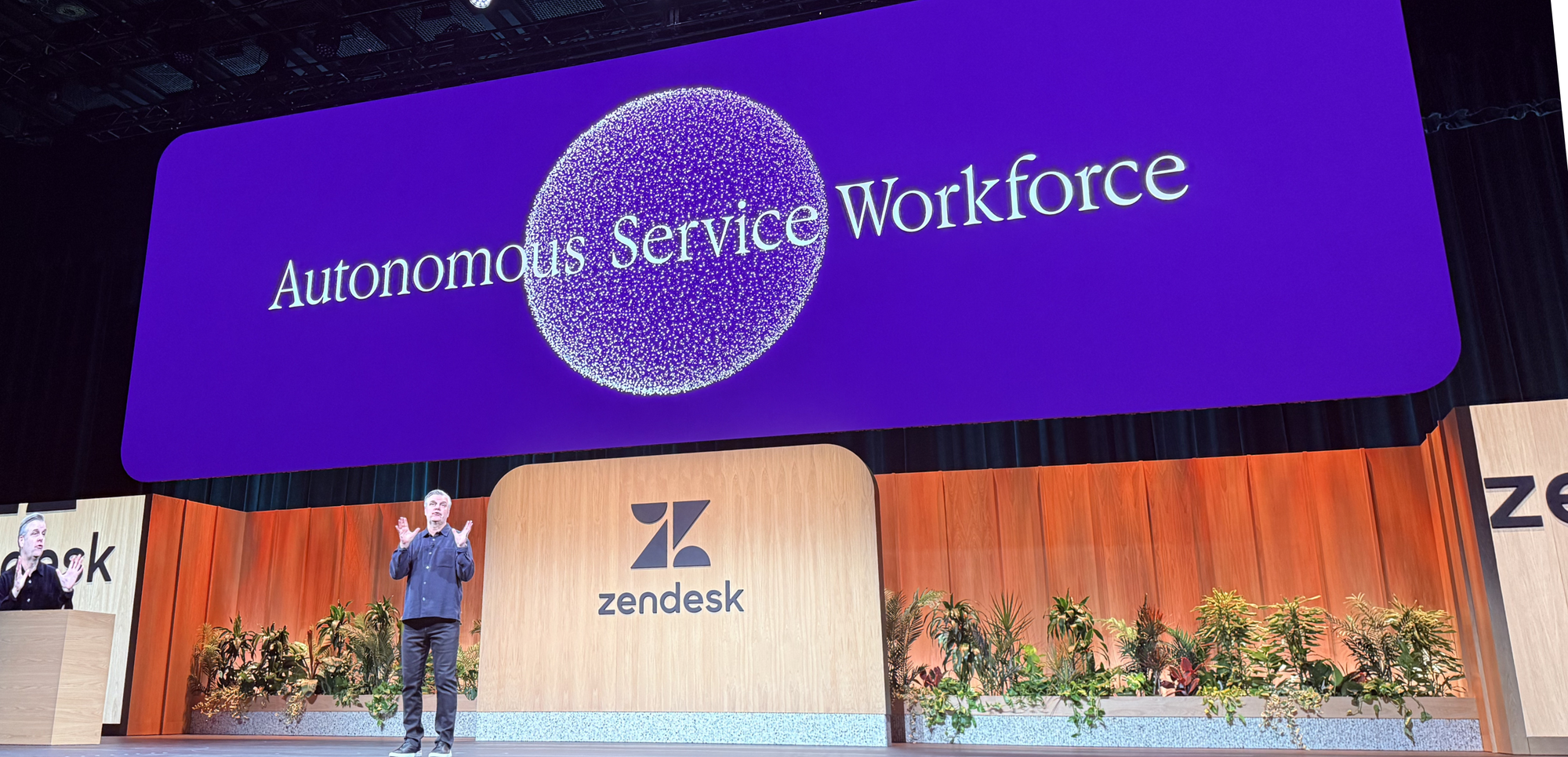
That gives the system the ability to automate business processes that go beyond simply handling a conversation and promotes component usage, making it quicker to scale operations and automate and resolve more complex use cases. Or as the keynote framed it: an autonomous service workforce.
 Thomas Verschoren
Proactive Copilots
That new resolution capability feeds directly into the learning side. At Relate, Zendesk introduced a Copilot for every supporting element of the Resolution Learning Loop.
Historically, QA and Analytics produced reports. A Zendesk admin looked at the reports and interpreted the numbers. If numbers showed an issue, the admin analysed the problem, tried to identify a cause, and planned a fix. That solution was built by the Admin in in Admin Center or Knowledge, and then deployed.
Once deployed, the impact of those changes showed up in new reporting and the next round of improvements could begin. It was a human-led loop from start to finish.
With these new Copilots, the old model of learning changes from a human-led reporting cycle into a genuine collaboration. Instead of simply producing dashboards and metrics for an admin to interpret, the platform now helps teams ask better questions, uncover patterns and translate insights into action.
Each of these Copilots offers insights to Admins on what’s happening in their instance. They offer proactive recommendations on what can be improved. These recommendations contain context on why the suggestion is made, what the impact will be, and how to implement it. And the AI assistant part of every Copilot allows admins to dive deeper, plan solutions, approve them and have them deployed automatically
- Analyst Copilot makes reporting feel less like "build the dashboard" and more like "ask the question."
- Knowledge Copilot keeps your articles and procedures in step with real customer behaviour.
- Admin Copilot goes a step further by recommending changes to setup, helping plan improvements and executing them after approval.
The result is that the platform is no longer just describing what happened. It is actively helping improve the system itself, suggesting changes to procedures, knowledge and routing based on interaction data and operational metrics, while your team remains in control of the decisions that matter.
This is what makes the Resolution Learning Loop real this year. It's no longer a sequence of separate activities stitched together by humans doing all the manual work. It's a collaborative system where Copilots and people work together on one platform, and where the output of one side continuously improves the other.
For team leads and admins, that changes the job in a very real way. The old role was mostly "I build." Triggers. Macros. Reports. Procedures. All the hands-on configuration that came with them. The new role is increasingly "I plan." You bring the strategy, goals and judgment.
The platform proposes the implementation. You approve, adjust or redirect. So instead of spending most of your time inside settings menus, you spend more time deciding what your CX operation should look like and how it should evolve.
This enables real shift in the admin role. They’ll spend less time assembling the machine. And more time telling it where it should go next.
 Thomas Verschoren
Connected AI Systems
Both AI Agents and Copilots run on top of Zendesk's platform. And that platform is quickly shedding its ticketing past and evolving into a connected platform ready for a world powered by AI.
Zendesk's collection of integration solutions are all being combined into one Action Builder platform. Those Action flows are accessible to Agent Copilot, to classic triggers, to external webhooks and now to AI Agents. A single action can be reused at any point in a conversation's lifecycle, and improvements to its logic directly impact every part of the platform that uses it.
For those who see the benefits of agentic reasoning over deterministic logic towards agentic reasoning when it comes to handling complex workflows, well, the new Custom Agents also live also within this ecosystem, making them available of part of any workflow you need.
Action Builder workflows themselves become more powerful too. The set of native connectors has expanded with more than a dozen new integrations since last year. Google Drive, Asana, Microsoft Teams and Jira to name just a few.
But while Zendesk has expanded the library of connectors, it isn't feasible to have a native integration for every platform. Custom Actions already let you add new capabilities one API at a time. The newly added support for the MCP protocol makes it possible to connect to external systems and ingest their entire available API library at once. And since both AI Agents and Agent Copilot can call Action Builder, they get access to those new MCP connectors too.
That's not the only connectivity change though. For companies that want to integrate Zendesk into their existing tools, there's also the new Zendesk MCP server, making it easier to do things like create tickets from within Microsoft Copilot. And since more and more customer searches starts in tools like ChatGPT, the new LLM as a Channel allows Zendesk-powered AI Agents to resolve customer questions directly inside those tools. Service goes wherever the customer already is.
As AI chatbots become more common, users are increasingly expecting every interface to feel conversational first. We’re seeing that shift in the way people search with Gemini and code with Claude Code. Zendesk is following suit by rethinking the role of its Help Center.
In a world where contextual and generative AI can deliver answers directly, the traditional support-article browsing experience is losing relevance. With the launch of the new Conversational Help Center, Zendesk is replacing the familiar list of blue links with Quick Answers. Those can escalate directly to AI Agents, building on the work it introduced earlier this year with the embeddable web widget.
Thomas Verschoren
Expanding the platform
Sitting alongside these three main themes is an overall platform expansion. Employee Service and Contact Center both reach new maturity at Relate 2026.
For Employee Service, there’s a new specialised AI Agent, built on top of Unleash, that pulls knowledge from Google Drive, SharePoint, Confluence and other enterprise systems, while respecting the role-based access controls already in place, making it the ideal AI Agent for IT, HR or other employee-first use cases.
The release of a native ITAM offering rounds out the offering, with asset tracking, service catalogs, approval and tasks lists built into the Zendesk workspace. This allows companies to track and manage their devices, licences and peripherals directly inside Zendesk, while linking them to management tools like Intune or Jamf. All visible in the same workspace where the IT team handles tickets.
Underneath this Zendesk for Employee Service sit Custom Objects. They power the entire ITAM stack, and now get support for parent-child relationship and new field types like rollup fields and currency fields. Custom Objects are now part of the Action platform too, allowing them to trigger custom flows, or be updated when something happens on a linked ticket. And with the new AI builder integrated in Admin Copilot you can now describe the objects you need, and the system builds the structure for you.
For Contact Center, Zendesk now offers it bundled with AWS into a single contract, making onboarding a lot easier than before. Zendesk’s new Voice AI Agents will also run on Contact Center, and multimodal capabilities like browser-based video calling and screen sharing will arrive in EAP soon.
A New Resolution Platform
Step back from the announcements, and we can see two different paradigms in motion.
Zendesk is changing the way you interact with the platform.
For most of its history, Zendesk was a tool you used. You logged in. You configured. You read tickets. You solved them. You ran reports. The platform supported the work, but didn’t drive it.
Relate 2026 is where that changes. A family of autonomous agents now drive the experience. AI Agents resolve conversations. Agent Copilot assists agents. Specialised Custom Agents handle the complex processes. Copilots recommend changes and provide insights.

Service stops being something humans deliver with AI help. It becomes something the platform delivers, with humans in the loop where they add the most value. The Resolution Learning Loop keeps everything improving. Your team’s job is to set direction, validate outcomes, and handle the cases that genuinely need a human.
Zendesk is refactoring the way the platform operates
Instead of a platform that revolves around a ticket inbox, it’s turning into a platform that revolves around solving use cases.
At the top sits a team of agents, both human and AI, driving towards resolution. They work across any channel, and the interfaces you use to interact with them quickly become irrelevant as content adapts dynamically to fit the interface. Below those interfaces, Intelligent triage detects Intent, which in turn invokes the right process to resolve that conversation, while omnichannel routing makes sure tickets end up with the right agent.
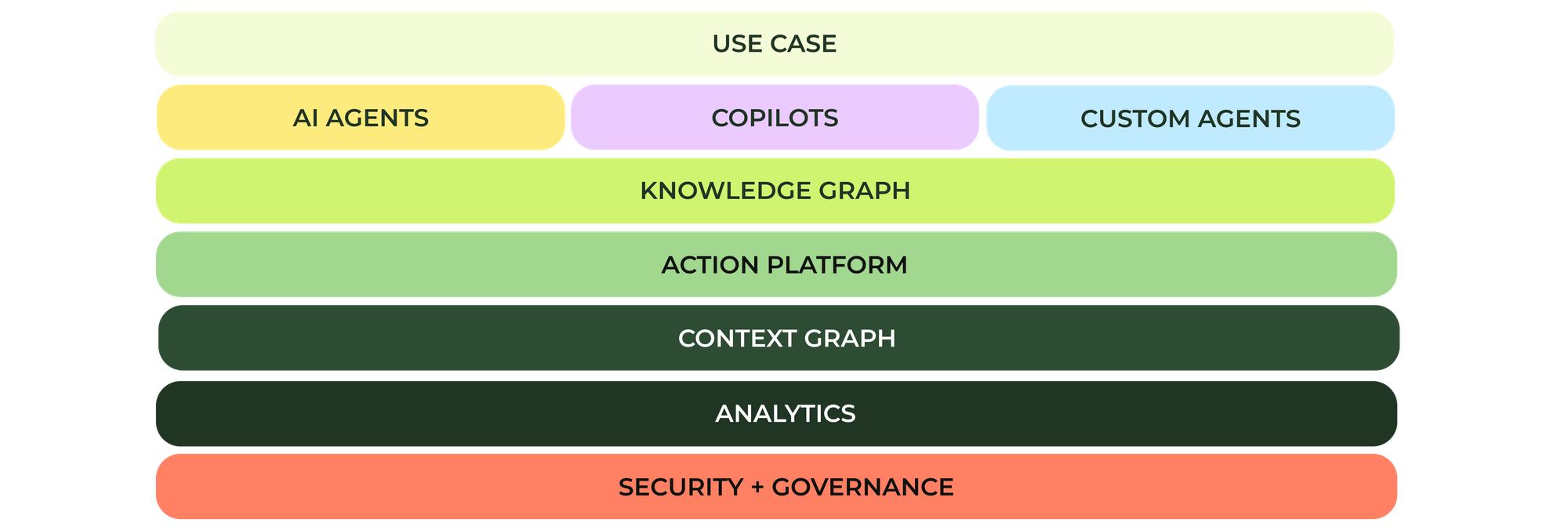
These use cases are supported by the platform underneath: knowledge, procedures, action flows and data, together with insights and governance. Combined they give your agents the building blocks they need to resolve a conversation. Individually they each get their own Copilot, providing insights, recommending improvements, and helping your team configure the environment and create content.
The platform is shifting into an engine that powers your resolutions and empowers your admins.
The Autonomous Service Workforce
Three years ago, Zendesk's story was AI for the era of customer service. Last year, the story sharpened to a single word: resolution. This year, the story takes its next step. The Autonomous Service Workforce.
The Resolution Platform now runs both loops. The resolution flow handles the customer's question. The learning flow makes the platform better at handling the next one. Teams of specialised AI Agents handle the work. Proactive Copilots keep the system improving.
That's the Relate 2026 story.
Linked throughout this article, and also available on the homepage of Internal Note are three other articles that dive deeper into the announcements. Enjoy!